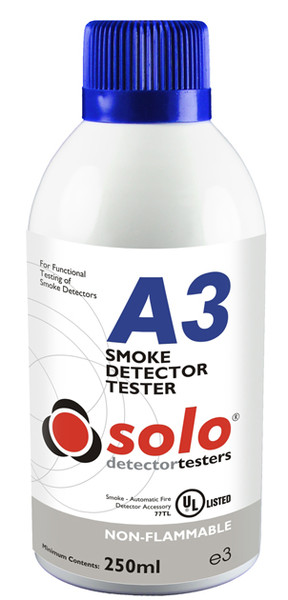
Smoke Detector Testing Spray – Professional Aerosol for Functional Detector Testing
UL Certified & Non-Flammable – Simulates Real Fire Smoke Without Harmful Residue
Ensure your smoke detectors are functioning properly with our Professional Smoke Detector Testing Sprays, designed to safely simulate real smoke conditions. These aerosols provide a true functional test of optical/photoelectric smoke detectors, verifying not just battery power but also that smoke can properly enter the sensing chamber—something the test button cannot check.
Key Features:
✔ True Functional Testing – Simulates real smoke particles to verify complete detector operation, including vent/obstruction checks.
✔ Non-Flammable & Safe – Formulated for use in sensitive marine and industrial environments.
✔ Residue-Free Formula – Evaporates completely, protecting detector electronics and preventing sensitivity drift.
✔ UL Certified & Manufacturer Approved – Meets global testing standards for smoke detectors.
✔ Extended Reach – Aerosol spray extends up to 1.2m, allowing floor-level testing without ladders.
Professional Applications:
Marine & Offshore – SOLAS-compliant testing for vessel fire detection systems.
Industrial Facilities – Warehouses, factories, and commercial buildings.
Marine & Industrial – Test installed detectors without leaving residue that could affect sensitivity.
The test button only confirms electrical function. Aerosol testing ensures smoke can physically enter the chamber and trigger the alarm—critical for vessels and industrial sites where undetected fires have catastrophic consequences.
Proper Usage Instructions:
Shake can well before use.
Spray from 30cm–1m distance directly toward the detector.
Spray for 2–5 seconds – The detector should enter alarm state within seconds.
Test frequency – Every 6 months recommended for marine and industrial installations.